3D Super Sale: Why Vector Quality Matters More Than You Think
You have likely stumbled upon the 3D Super Sale while browsing design marketplaces or social media ads. The promise is enticing: high-impact, three-dimensional graphics that can instantly elevate your marketing materials, website headers, or social media posts. For entrepreneurs, bloggers, and small business owners looking to boost their visual presence without hiring a full-time graphic designer, these assets seem like a no-brainer. However, not all "3D" designs are created equal, and understanding the technical difference between a raster image and a vector file is the single most important factor in deciding whether this purchase will save you time or cost you money.
The core appeal of products marketed under labels like the 3D Super Sale lies in their versatility. Unlike static images that look pixelated when stretched, fully editable vector designs offer infinite scalability. This means you can take a logo or a decorative element designed for a business card and use it on a billboard without losing any sharpness. But to realize this potential, you must understand how to handle the files correctly. Many buyers make the mistake of assuming that because an image looks good on a phone screen, it is ready for print or large-format display. It is not. Without the right source files, your professional efforts can quickly degrade into blurry, unprofessional visuals.
Understanding the Format: EPS vs. JPG
When you download a package labeled as containing a 3D Super Sale asset, you will typically receive two distinct types of files: .JPG and .EPS. Confusing these two formats is a common pitfall for beginners. A .JPG file is a raster image. It is made up of pixels, much like a photograph. If you try to enlarge a .JPG file beyond its original dimensions, the software has to guess what pixels should fill the empty space, resulting in a blocky, jagged appearance known as aliasing. This is disastrous for professional presentations where clarity is key.
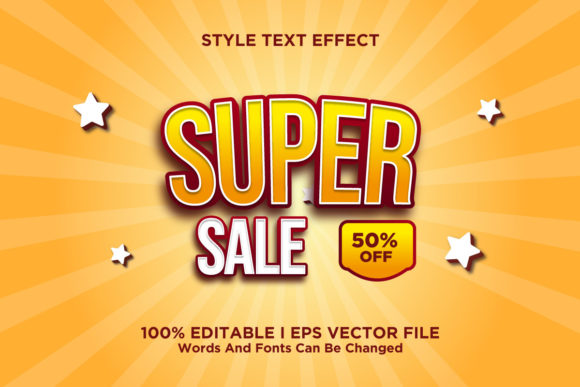
In contrast, the .EPS (Encapsulated PostScript) file is a vector format. This is the "gold standard" for scalable design. Because vectors are defined by mathematical equations rather than fixed pixels, they can be enlarged or reduced to any size—whether it is the width of a postage stamp or the height of a skyscraper—and the quality remains pristine. The description accompanying the 3D Super Sale emphasizes that this is a "fully editable vector design." This is the critical feature that justifies the investment. If you only received a .JPG, you would be locked into one specific size, severely limiting your creative options.
Why Editing Capability Is Non-Negotiable
Purchasing a pre-made design is efficient, but rigid designs rarely fit every brand perfectly. The true value of the 3D Super Sale lies in its editability. The product description highlights that the text within the design is "fully editable." This allows you to customize the message to suit your specific campaign, sale event, or brand voice without needing to recreate the entire graphic from scratch. Imagine wanting to change "Summer Sale" to "Winter Clearance" or adjusting the font to match your company’s branding guidelines. With a properly formatted vector file, this is a simple task. Without it, you might find yourself stuck with generic text or having to pay a designer to modify a static image—a process that is often more expensive and less precise than doing it yourself.
Furthermore, the ability to change colors is equally vital. The listing mentions "Unlimited Color Variations editing in AI." This refers to Adobe Illustrator, the industry-standard software for working with vectors. Being able to swap out a bright red background for a subtle navy blue allows you to repurpose the same asset across different marketing channels that may have strict color palette requirements. This flexibility extends the lifespan of your purchase, making it a more cost-effective solution in the long run.
How to Avoid Common Technical Mistakes
Even with the best tools, users often encounter hurdles when trying to edit vector files. One frequent error is attempting to open an .EPS file in a program that does not support it natively, such as Microsoft Word or basic photo viewers. These programs cannot interpret the vector data, leading to errors or flattened, non-editable images. To ensure you get the most out of your 3D Super Sale purchase, you must use compatible software.
Step-by-Step Best Practices:
- Use the Right Software: Ensure you have Adobe Illustrator CS or CC installed. While other vector editors exist, the instructions provided with the 3D Super Sale are optimized for Adobe’s ecosystem. Using incompatible software can result in missing fonts or broken links.
- Select the Text Tool Correctly: Once the file is open, do not click randomly. Press the T key on your keyboard to activate the Text Tool. This is a shortcut that professionals use daily to speed up workflow. Then, click directly on the text layer you wish to modify. Clicking elsewhere may select a shape or background element instead.
- Preserve the Original: Before making changes, it is wise to save a backup copy of the original file. This ensures that if you accidentally delete a crucial design element, you can revert to the starting point without having to re-download or re-purchase the asset.
- Check Your Fonts: When you open the file, Illustrator may prompt you to substitute missing fonts. Always check which fonts are being used and install them if possible. Using default system fonts can alter the intended aesthetic of the 3D effect, potentially ruining the visual impact.
Evaluating Value Before You Buy
Before adding the 3D Super Sale to your cart, consider your end goal. Are you creating content primarily for digital screens, such as Instagram posts or email newsletters? In this case, the .JPG files included in the download are sufficient and easier to manage. However, if you plan to print flyers, banners, or merchandise, the .EPS file is indispensable. Printing at low resolutions results in blurry, unprofessional output that can damage your brand's credibility.
Additionally, verify the complexity of the design. Some vector files contain thousands of anchor points, which can slow down older computers. If you are using a less powerful machine, test the file on a trial basis before committing to large-scale projects. Also, review the licensing terms. While the file itself is editable, ensure you have the right to use the design commercially. Most marketplaces provide clear licenses, but it is always safer to double-check that you are allowed to modify the text and colors for your own business purposes.
Final Thoughts on Smart Design Choices
The 3D Super Sale represents a practical resource for anyone looking to enhance their visual communication with minimal effort. By focusing on editable vectors rather than static images, you gain the freedom to adapt your marketing materials to changing needs. The key to success lies in technical proficiency: using the correct software, understanding the difference between raster and vector formats, and following proper editing protocols. When approached with these precautions, the 3D Super Sale becomes more than just a collection of graphics; it becomes a versatile tool in your marketing arsenal, capable of delivering high-quality results across both digital and print mediums. Take the time to learn the basics of Adobe Illustrator, and you will find that the initial learning curve pays off in saved time and improved design quality.