The Ultimate Guide to Utilizing High-Quality 3D Promotion Designs for Your Brand
In the fast-paced world of digital marketing and visual communication, capturing attention is half the battle. The other half is delivering a message that is not only clear but visually stunning. This is where the power of 3D promotion designs comes into play. Whether you are a small business owner launching a new product, a marketer planning a seasonal campaign, or a creative professional looking to enhance your portfolio, understanding how to utilize premium design assets can significantly elevate your brand’s presence.
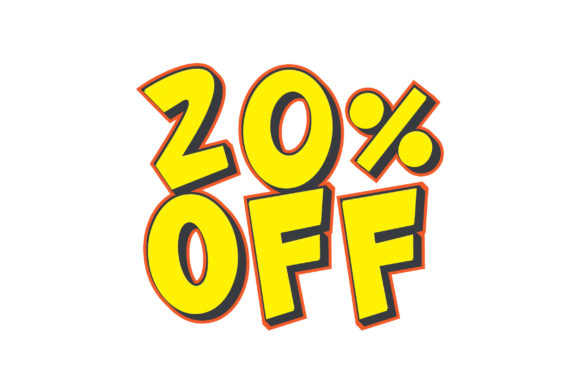
Today, we are diving deep into the specifics of acquiring and using high-quality 3D promotional templates—specifically those offering significant value like a 20% off discount. We will explore why these files matter, what formats you should look for, and how they fit into modern business strategies. By the end of this article, you will have a comprehensive understanding of how to leverage these resources to create compelling visual narratives.
Why 3D Visuals Are Dominating Modern Marketing
Gone are the days when flat, two-dimensional graphics were sufficient to stand out in a crowded digital landscape. With the rise of augmented reality (AR), advanced web browsers, and sophisticated social media platforms, consumers have become accustomed to depth, texture, and realism. 3D visuals provide a sense of tangibility that flat images simply cannot match. They allow potential customers to "see" the product from multiple angles, creating an emotional connection before they even make a purchase.
When a brand uses a high-resolution 3D mockup for a promotion offer, it signals professionalism and attention to detail. It suggests that the company invests in quality, which translates to trust in the consumer's mind. For instance, imagine scrolling through Instagram and seeing a flat image of a sale tag versus a realistic, glowing 3D render of a "20% Off" badge floating above a product. The latter commands more attention and encourages higher click-through rates.
The Significance of File Formats in Professional Design
One of the most critical aspects of purchasing or downloading a design asset is understanding the file formats included. A robust design package does not just give you one type of file; it provides versatility. Let’s break down the specific formats mentioned in our focus topic and why each one is indispensable for different use cases.
Vector Files: AI and EPS
AI (Adobe Illustrator) and EPS (Encapsulated PostScript) files are vector-based. This means they are made up of mathematical paths rather than pixels. The primary advantage of vector files is scalability. You can resize a 3D promotion graphic from the size of a business card to the size of a billboard without losing any quality. If you need to edit text, change colors, or modify elements within the 3D scene, these are the files you will use. They are the backbone of any professional design workflow.
Raster Files: JPEG and PNG
While vectors are great for editing, raster files are often used for final output on the web. JPEG files are compressed image formats that are universally supported across all devices and platforms. They are perfect for general display where file size needs to be managed. However, the true hero here is the PNG (Portable Network Graphics) file, specifically the version with a transparent background.
A transparent PNG allows you to place your 3D promotional element onto any background—be it a photograph, a solid color, or a complex pattern—without having an ugly white box surrounding it. This is crucial for integrating 3D badges, ribbons, or product showcases seamlessly into existing marketing materials.
Scalable Web Graphics: SVG
The SVG (Scalable Vector Graphics) format is becoming increasingly important for web design. Unlike traditional images, SVGs are code-based, meaning they load quickly and remain crisp on any screen resolution, including Retina displays. Using an SVG for a 3D-style icon or badge on your website ensures that your site looks sharp on mobile phones, tablets, and desktop monitors alike.
Understanding the Value Proposition: The 20% Off Discount Offer
In the context of digital marketplaces like Creative Market, Envato, or Etsy, designers often bundle their work with discounts to encourage sales. When you see a listing for a 3D Promotion Offer that includes a 20% off discount, it represents more than just savings; it represents accessibility.
High-quality 3D rendering requires specialized software (like Blender, Cinema 4D, or Adobe Dimension) and technical skill. Hiring a designer to create custom 3D assets for every campaign can be prohibitively expensive for small businesses. By purchasing a pre-made, high-quality template at a discounted rate, you gain access to professional-grade visuals at a fraction of the cost. This democratizes design, allowing entrepreneurs to compete with larger corporations visually.
Furthermore, the "20% off" aspect often applies to bulk purchases or bundles. This encourages users to acquire a suite of assets—perhaps a matching set of sale banners, social media posts, and email headers—ensuring brand consistency across all channels.
Technical Specifications: What Does 1200px by 1200px Mean?
When reviewing design assets, you will often see dimensions listed, such as an Artboard size of 1200px by 1200px. Understanding this specification is key to ensuring your designs look their best.
A square canvas of 1200x1200 pixels is the gold standard for social media content, particularly for Instagram posts and Pinterest pins. These platforms prioritize square or vertical formats because they occupy more screen real estate on mobile devices. By starting with a 1200x1200 artboard, you ensure that your 3D promotional elements are optimized for these high-traffic areas.
Moreover, this resolution provides enough pixel density for high-definition displays. If you plan to scale the image down for smaller icons, you still retain clarity. If you plan to print it at a reasonable size (such as a flyer or brochure), the resolution is sufficient for high-quality output, provided you are working with the vector source files (AI/EPS) for the actual printing process.
Practical Applications: How to Use These Assets Effectively
Knowing you have the files is one thing; knowing how to use them is another. Here are several practical ways to integrate these 3D promotion assets into your workflow:
- Social Media Campaigns: Use the transparent PNG versions to overlay "20% Off" badges onto product photography. Create a series of posts leading up to a launch, using the AI file to tweak colors to match your brand palette.
- Email Marketing: Incorporate SVG elements into your HTML emails. Because SVGs are lightweight, they won’t slow down your email client, and they will render sharply on all devices, increasing the likelihood of clicks.
- Website Banners: Use the high-quality JPEGs for hero sections on your website. Ensure they are optimized for web speed by compressing them appropriately without visible loss of quality.
- Print Materials: Export the vector files (EPS/AI) for large-format printing, such as trade show banners or window decals. The scalability ensures your 3D graphics look crisp even from a distance.
Common Misunderstandings About Template Usage
A common misconception among beginners is that using a template limits creativity. In reality, templates are starting points. The AI file gives you full control. You can deconstruct the 3D scene, change the lighting, alter the typography, and combine elements from different templates to create something entirely unique. The goal is not to copy-paste blindly, but to adapt the asset to tell your specific brand story.
Another assumption is that "free" or cheap assets are low quality. While this can be true in some contexts, reputable marketplaces vet their contributors. A well-crafted 3D asset with a 20% off discount is often a strategic pricing model to build a customer base, not a sign of poor quality. Always check reviews and preview images before purchasing.
Support and Community: Why Contact Matters
The description of these assets often includes a reassuring note: "If you need any help please feel free to contact me via my profile." This is a vital component of the user experience. Design software can be complex. You might encounter issues opening an EPS file in an older version of Illustrator, or you might struggle to separate layers in the AI file.
Access to direct support ensures that you can resolve these technical hurdles quickly. It transforms a static product download into a supportive service. For non-designers, this support can be the difference between successfully executing a campaign and abandoning the project out of frustration. Always take advantage of this resource; it adds immense value to the purchase.
Conclusion: Elevating Your Brand with Strategic Design Choices
Incorporating high-quality 3D promotional assets into your marketing strategy is no longer a luxury; it is a necessity for brands that want to remain relevant and engaging. By leveraging versatile file formats like AI, EPS, JPEG, PNG, and SVG, you ensure that your message is delivered clearly and beautifully across every platform.
The availability of these assets at a 20% discount makes professional design accessible to everyone. Whether you are adjusting a 1200px by 1200px artboard for Instagram or preparing a print-ready vector for a billboard, the right tools empower you to communicate effectively. Remember to utilize the support offered by creators, experiment with the editable layers, and always prioritize quality. In the visual economy, your design is often the first handshake you offer to a potential customer—make it count.
Start exploring these resources today, and transform the way your audience perceives your brand. The combination of technical precision and creative flexibility found in these 3D promotion offers is designed to help you succeed in an increasingly competitive digital world.