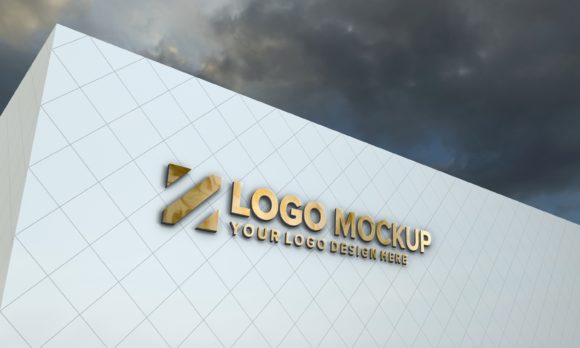
Logo Mockup 3D Sign Façade Building
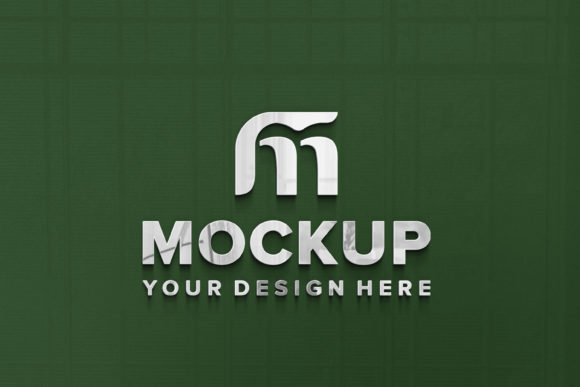
Walking down a busy city street, your eyes are naturally drawn to the way light catches the edge of a building’s signage. That split-second decision to notice a brand often happens before you even read the name. For designers and business owners, translating a flat digital logo into that tangible, three-dimensional presence is where the magic of branding truly begins. This is where a high-quality Logo Mockup 3D Sign Façade Building becomes an indispensable tool in your creative workflow.
Gone are the days when presenting a logo meant showing a client a static PNG on a white background. Today, stakeholders need to visualize how their identity interacts with real-world architecture. They need to see depth, texture, and context. A modern façade mockup doesn’t just display a logo; it tells a story about the brand’s stability, innovation, and place in the urban landscape. Whether you are pitching a rebrand to a corporate client or visualizing a new storefront for a local café, seeing your design rendered in realistic 3D can make or break a presentation.
Why Realism Matters in Brand Presentation
The primary value of using a Logo Mockup 3D Sign Façade Building lies in its ability to bridge the gap between concept and reality. When you present a flat vector file, you are asking your client to use their imagination to fill in the blanks. But human brains are wired to react to visual cues like shadows, reflections, and material textures. By providing a photorealistic rendering, you remove the cognitive load from your audience. They don’t have to guess how the gold foil will look in sunlight; they can see it.
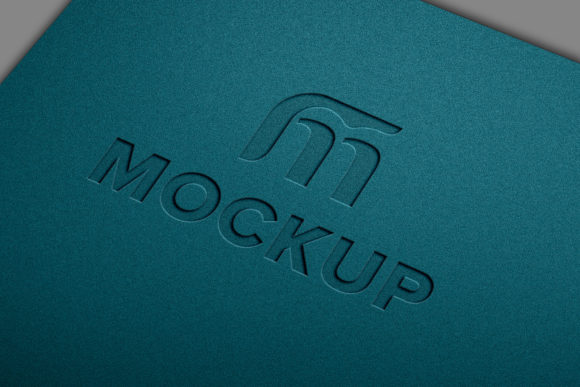
This level of detail is crucial for industries where perception is everything. Consider a luxury hotel chain looking to refresh its exterior signage. The difference between a matte black finish and a brushed silver embossed effect can signal entirely different brand values—one might feel understated and exclusive, while the other feels sleek and contemporary. A mockup that supports various styles, including 3D extrusions, metallic finishes, and embossed details, allows these nuances to be explored before a single piece of metal is cut.
Real-World Scenarios for Modern Designers
Let’s look at how this specific type of mockup fits into actual professional scenarios. Imagine you are a freelance graphic designer working with a tech startup that has just secured funding to open its first flagship office. The CEO wants the building’s entrance to scream "innovation." You pull up a modern building façade mockup featuring clean lines and glass elements. Using smart objects, you swap out their abstract geometric logo. Suddenly, the idea isn’t abstract anymore. It’s a concrete plan. The client can see how the logo sits against the dark grey cladding, perhaps with a subtle silver gradient to mimic stainless steel.
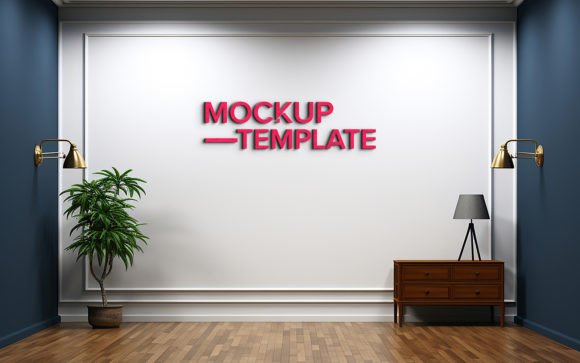
Or consider a marketing agency preparing a pitch for a restaurant group expanding into downtown areas. They aren’t just designing a menu; they are designing the curb appeal. The agency uses a mockup that showcases a variety of perspectives—maybe a low-angle shot to make the building look imposing and grand, or a street-level view to show how the sign reads from a pedestrian’s eye level. This helps the client understand not just the aesthetic, but the visibility and impact of the signage in a crowded environment.
Even interior designers find value here. While the focus is on the façade, understanding how the exterior branding aligns with the interior design creates a cohesive brand experience. If a coffee shop’s logo is warm and rustic, placing it on a mockup of a sleek, minimalist glass tower might raise questions. The mockup serves as a sanity check, ensuring the exterior branding matches the intended vibe of the space.
Tailoring the Experience to Different Audiences
Not every user benefits from a Logo Mockup 3D Sign Façade Building in the same way. For seasoned professionals, the speed and flexibility of the file are paramount. These users appreciate features like fully layered PSD files (minimum CS6) and organized folder structures. They know that spending twenty minutes untangling messy layers is time stolen from billable work. A well-organized file allows them to dive straight into customization, tweaking lighting angles or swapping materials without fighting the software.
For smaller business owners or entrepreneurs who may not have a dedicated design team, the ease of use is the key selling point. The ability to change and place their own design with just a few clicks using Smart Objects democratizes the design process. They don’t need to be experts in Photoshop to achieve a professional result. They simply drag and drop their logo file, and the mockup handles the perspective correction and blending modes automatically. This accessibility empowers non-designers to create compelling visual assets for social media, investor decks, and internal approvals.
Technical Considerations and Workflow Efficiency
When selecting a mockup resource, technical specifications play a huge role in the final output quality. A resolution of 5000 x 3000 pixels ensures that even large-format prints or high-resolution web displays remain crisp. The 72 DPI standard is typical for screen-based presentations, but the sheer pixel count allows for significant cropping and resizing without loss of fidelity. This is particularly useful when you need to repurpose the same image for different contexts—perhaps a wide banner for a website header and a square crop for Instagram.
The inclusion of V-Ray rendered backgrounds adds another layer of realism. V-Ray is known for its physically accurate lighting simulation, meaning the shadows cast by the building and the reflections on the signage behave exactly as they would in the real world. This attention to physics prevents the "floating logo" effect, where a design looks artificially pasted onto an image. Instead, the logo appears anchored to the structure, interacting with the ambient light and environment.
However, it is important to acknowledge potential limitations. Not all logos translate equally well to 3D effects. Extremely thin fonts or intricate details might get lost in the rendering or become difficult to read at a distance. Before applying a heavy 3D or embossed effect, it is wise to test readability. Additionally, while the mockup provides a realistic base, it is still a simulation. Actual fabrication costs, material constraints, and installation challenges are not reflected in the digital file. Clients should always be reminded that the mockup is a visualization tool, not a construction blueprint.
Maximizing the Value of Your Assets
To get the most out of your Logo Mockup 3D Sign Façade Building, treat it as part of a broader presentation strategy. Don’t just send a single image. Create a sequence: start with the flat logo, move to a simple wall application, then reveal the full 3D façade render. This narrative arc guides the viewer through your thought process, highlighting why certain design choices were made. Use the included help file to master any advanced techniques, such as adjusting the curvature of the sign or simulating night-time illumination if the mockup supports emissive layers.
Furthermore, leverage the versatility of the different perspectives. If you are presenting to a remote team, a slightly angled shot might convey more depth than a straight-on view. If you are printing brochures, ensure the color profile matches your printer’s requirements, even though the source is a screen-based PSD. The modularity of the file means you can experiment freely. Try contrasting a vibrant logo against a muted concrete background, or pair a monochrome logo with a textured stone façade. These variations provide clients with options, making them feel involved in the creative process.
In conclusion, a Logo Mockup 3D Sign Façade Building is more than just a pretty picture. It is a strategic asset that enhances communication, builds confidence, and accelerates decision-making. By choosing a high-quality, versatile mockup that offers realistic effects and easy customization, you position yourself as a thoughtful partner who understands the practical realities of bringing a brand to life. Whether you are refining a digital identity or planning a physical expansion, investing in realistic visualization pays dividends in clarity and impact.